When the temperatures drop and the leaves start to fall, some grill owners assume it's time to cover the grill and wait for spring. But cookout season doesn't have to end when summer does. In fact, more than 60% of backyard chefs grill year-round, and propane makes it easy to keep cooking outdoors all winter long. An added bonus: there are no bugs to swat away. With just a few cold-weather adjustments, you can help your grill and propane tank perform their best no matter what the thermometer says.
1. Propane Still Works in the Cold
One of the most common myths about winter grilling is that propane won't flow in low temperatures. The good news is that propane is built for the cold. Propane is stored in your tank as a liquid, and it has to boil to turn into the gas that fuels your grill. Because propane's boiling point is -44°F, it will continue to vaporize and flow in almost any winter weather you'll encounter. That means you can count on propane to deliver instant, reliable heat even when temperatures dip below freezing.
2. You'll Use More Fuel in Winter
Cold air affects how quickly your grill heats up and how long your food takes to cook, which means you'll typically go through more propane than you would in the summer. Preheating can take up to twice as long in freezing temperatures, so plan for at least 15 extra minutes before you start cooking. Once your food is on the grill, expect it to take longer to cook than it would on a warm day.
A few simple habits can help you make the most of your fuel. Keep the lid closed as much as possible to hold in heat, especially when cooking low and slow foods or for using indirect grilling. Choosing thinner cuts of meat and fast-cooking vegetables is another easy way to shorten your time at the grill and conserve propane.
3. Lighting Your Grill May Take a Different Approach
Before lighting your grill in any season, always perform a leak check to make sure your connections are secure. In cold weather, you may also notice that your propane grill is a little harder to light. One helpful tip is to open the tank valve just one turn before lighting instead of opening it all the way.
If your grill has been sitting unused for a while, it's also a good idea to check gas lines, burners, and jets for blockages before you cook. Spiders and other insects can build webs inside these parts that restrict gas flow. Once your grill is lit, don't skip the preheat. Giving your grill enough time to fully heat up is an important step in making sure it can do its job successfully in cold temperatures.
4. Plan Your Grill Setup Around Winter Weather
Grilling safety guidelines apply all year long, but winter brings snow, ice, and wind that are worth planning around. Before lighting your grill, clear away any snow and ice from the grill itself and from your walking path so you can move safely while you cook. When possible, position your grill out of the wind. Cold gusts can pull heat away from the grill, and strong winds could even extinguish the flames.
As always, keep your grill at least 10 feet away from your house and flammable items. This includes garages, porches, carports, and overhangs, as well as flammable items like porch railings. When it's time to head outside, dress in warm layers that still give you plenty of room to move, and skip scarves or loose clothing that could catch fire.
5. Store Your Grill and Tanks the Right Way
Proper storage helps keep your grill and propane ready whenever you want to use it. Spare propane tanks should always be stored outdoors in a well-ventilated area, not in the garage. If you plan to store your grill in a garage or other enclosed area during the colder months, disconnect the propane tank first and keep the tank outside. A grill cover is another smart investment, helping protect your grill from snow, ice, and wind. Finally, check your tank level before temperatures drop so you aren't caught without fuel in the middle of a winter cookout.
Stay Fueled All Winter with Blue Rhino
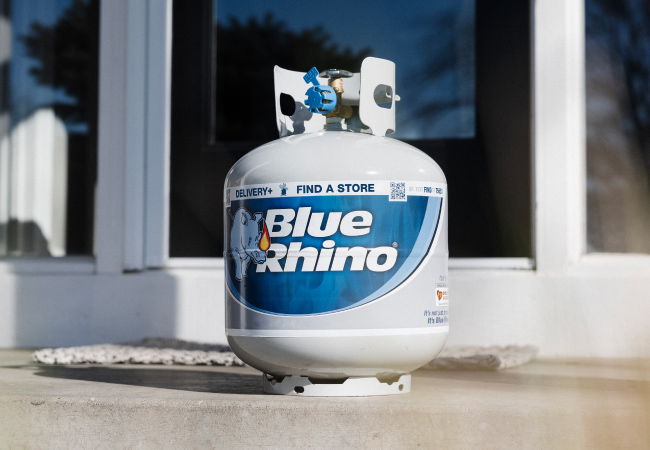
In the winter months, propane powers much more than your grill. It can also fuel patio heaters, fire pits, griddles, and generators, and more, making it a versatile fuel for staying warm and prepared all season. When you need a fresh tank, Blue Rhino makes it easy with convenient tank exchange locations across the country, or you can skip the trip altogether with Blue Rhino Delivery+, which brings propane right to your door in dozens of markets across the country.
Grilling in cold weather doesn't have to be complicated. A few simple adjustments, like allowing extra preheat time, keeping a tank on hand, and following proper placement and storage guidelines, make it easy to keep cooking out all winter. So bundle up, grab a fresh Blue Rhino, and keep the grill going no matter the forecast.
Published: 2026.10.07